
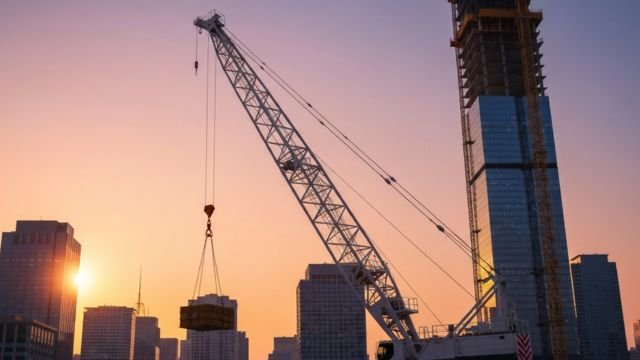
Urban construction often presents challenges that seem unsolvable on paper. Tight boundaries, limited street access, surrounding buildings, and strict council regulations can quickly turn a straightforward build into a logistical puzzle. This case study explores how a seemingly “impossible” site access issue was successfully resolved through strategic luffing crane hire, transforming constraints into a practical, efficient lifting solution.
The Project and Its Unique Constraints
The project involved a multi-storey residential development located in a dense inner-city precinct. The site was hemmed in by existing buildings on three sides, with a narrow frontage to a busy road. There was no room for material laydown, minimal space for crane slewing, and strict limits on oversailing neighboring properties. Traditional crane options were quickly ruled out, as even compact mobile cranes could not safely operate within the confined footprint.
From the outset, the project team recognized that standard approaches would not work. Access limitations and airspace restrictions demanded a crane solution that prioritized vertical lifting over horizontal reach. This is where luffing crane hire entered the discussion as a potential problem-solver rather than a last resort.
Why Conventional Crane Options Fell Short
Initial assessments considered mobile cranes for staged lifting, but the lack of setup space and frequent road closures made this approach impractical. Each lift would have required complex traffic management and significant downtime. Similarly, a hammerhead tower crane was deemed unsuitable due to its fixed jib radius and oversail issues.
For projects in metropolitan areas like those commonly associated with crane hire northern sydney, these challenges are increasingly common. What made this site particularly difficult was the combination of height requirements and the inability to swing loads freely. Any viable solution needed to work within extremely tight tolerances without compromising safety or project timelines.
The Decision to Use a Luffing Crane
After detailed consultation with engineers and lifting specialists, the team opted for luffing crane hire as the most viable solution. The luffing crane’s ability to raise and lower its jib allowed precise control over load movement, keeping all lifts within the site boundary. This feature alone addressed the most critical constraint: zero tolerance for oversailing adjacent properties.
Additionally, the crane could be installed within the limited footprint available, making it ideal for a site that had been labeled “impossible” during early planning stages. For projects similar to those requiring crane hire northern sydney, this level of adaptability is often the difference between moving forward or redesigning the entire construction approach.
Installation and Setup on a Restricted Site
Installing the luffing crane was itself a carefully orchestrated operation. Components were delivered in stages to avoid congestion and lifted during off-peak hours to minimize disruption. The compact base design allowed the crane to be erected within the building’s core, maximizing available space around the site perimeter.
Throughout the setup process, luffing crane hire proved its value by enabling precise assembly without encroaching on neighboring airspace. This minimized regulatory risk and ensured compliance with local council and aviation requirements, a common concern for crane hire northern sydney projects operating in built-up areas.
Operational Performance and Daily Efficiency
Once operational, the luffing crane quickly demonstrated why it was the right choice. Materials were hoisted vertically and placed accurately, reducing the need for secondary handling. The controlled jib movement allowed crews to work confidently, even during peak construction periods.
Unlike mobile cranes, which would have required frequent repositioning, the luffing crane maintained consistent lifting cycles throughout the day. This reliability is a key advantage of luffing crane hire, particularly on sites where efficiency is measured over months rather than individual lifts. For the project team, this consistency translated into fewer delays and improved coordination between trades.
Safety and Risk Mitigation Benefits
Safety was a major consideration given the site’s proximity to occupied buildings and public spaces. The luffing crane’s reduced slewing radius significantly lowered the risk of load swing, enhancing overall site safety. Operators were able to manage lifts with precision, even in variable wind conditions.
These safety benefits align closely with the expectations of modern crane hire northern sydney projects, where regulatory scrutiny and public safety are paramount. By choosing luffing crane hire, the project minimized risk exposure while maintaining steady progress.
Project Outcomes and Lessons Learned
The successful completion of this project demonstrated that no site is truly impossible with the right planning and equipment. The luffing crane not only solved access challenges but also improved productivity and safety outcomes. What began as a high-risk, complex build became a showcase for smart crane selection and proactive problem-solving.
One of the key lessons was the importance of early engagement with crane specialists. By considering luffing crane hire during the planning phase, the team avoided costly redesigns and delays. This approach is increasingly relevant for crane hire northern sydney, where space constraints are becoming the norm rather than the exception.
Turning Constraints into Competitive Advantage
This case study highlights how innovative thinking and the right crane solution can transform limitations into strengths. Luffing crane hire enabled a project once deemed unworkable to proceed smoothly, on schedule, and within safety requirements. For developers and contractors facing similar challenges, the message is clear: with the right expertise and equipment, even the most constrained sites can be successfully delivered.